Why You Can't Find the Used Car Part You Need
Six months of platform research into how used car parts actually sell - what sold, what never got listed at all, and what Australian buyers and wreckers can do about it.
There is a part you need right now. Somewhere in Australia, it is sitting on a shelf, on a pallet, or still bolted to a donor car in a wrecker's yard.
It just isn't findable.
That gap - between the parts that exist and the parts a buyer can actually locate - is the single biggest problem in the used car parts trade. Not supply. Not price. Discoverability.
Over six months, our team ran a controlled study into how car parts are actually bought and sold. They listed the same fixed inventory across four major platforms - eBay, Facebook Marketplace, Craigslist and OfferUp - and tracked exactly what happened. What sold, what didn't, where the conversations went, and what killed the deals that never closed.
The findings are uncomfortable, and they apply directly to the Australian market.
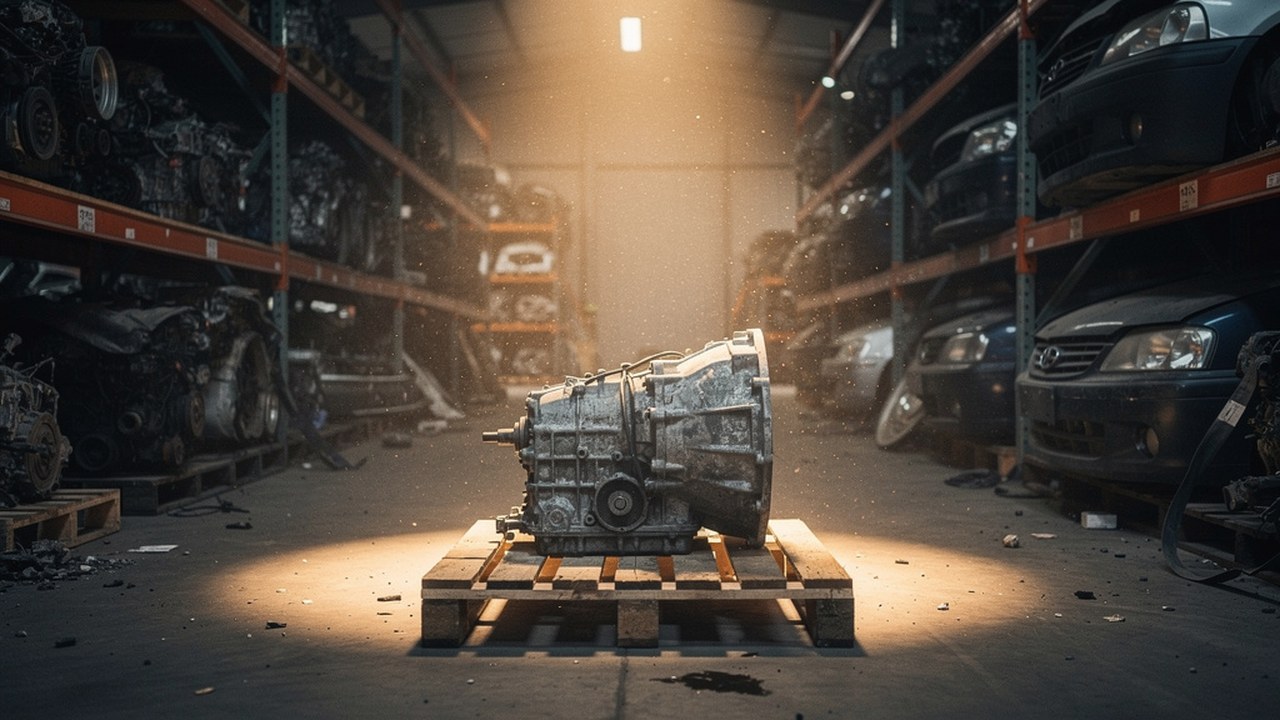
The problem isn't that the parts don't exist
Before the detail, the conclusion, because it reframes everything:
A huge amount of inventory never makes it online at all.
Parts don't get listed because listing takes time, because the seller doesn't have the information, or because they genuinely don't know what the part is or which vehicles it fits. And when parts do get listed, bad data makes them almost impossible to find.
Somewhere, a seller has exactly the part someone is searching for right now. They just can't find each other.
That is a data problem dressed up as a supply problem, and it is the reason "I couldn't find one" so often means "I gave up looking."
What six months of platform research found
1. Only two platforms really sell.
Of the four tested, only eBay and Facebook Marketplace produced consistent sales. The others generated the occasional transaction, and mostly on low-value items - the kind of purchase someone makes to own a piece of a car they'll never own.
The lesson: buyers concentrate where the inventory is. Everything else is background noise.
2. eBay drives volume - but everyone tries to leave.
eBay generated the most sales, and yet the pattern repeated constantly: as soon as buyer and seller could talk directly, they did.
Once the right buyer finds the right part, the path to a deal is short. What slows it down is the platform sitting in the middle.
3. Facebook grew its own parts ecosystem.
Marketplace works as the top of the funnel. The actual conversation then moves to messages and chats.
Beyond Marketplace, there is a sprawling network of fragmented groups - specific brands, specific models, specific generations. A lot of parts genuinely trade there. But the sales cycle is far longer, and a very large share of enquiries go nowhere at all.
4. Paid promotion barely moves the needle.
Paying to promote listings had almost no measurable effect. The reason is obvious once you say it out loud: car parts are not impulse purchases. Nobody scrolling their feed suddenly decides to buy a gearbox. Buyers arrive with a specific part in mind and compare price, condition, fitment and seller. Advertising doesn't create that intent, and it can't shortcut it.
5. Identification and descriptions are the real bottleneck.
This was the biggest finding by a wide margin. A very large proportion of parts are described incorrectly, poorly, or barely at all. Not just on the small platforms - on eBay too.
A listing that says "BMW gearbox, good condition" is invisible to the person searching for the actual part number, the actual model, the actual year, the actual variant. The part is online, technically. Practically, it may as well not exist.
The problem isn't that the parts don't exist. The problem is that buyers can't see them.
What this looks like in Australia
Nothing about those findings is uniquely American. Australia has the same structural problem in a smaller, more dispersed market.
Enormous inventory, much of it unlisted. Australian wreckers and dismantlers hold serious stock. A large share never gets photographed, described or published, because the yard is busy doing the work that pays today.
Listings written for humans scrolling, not for buyers searching. "Suit VS Commodore" tells a browser something. It tells a search engine almost nothing, and it doesn't answer the question a buyer is actually asking: does this fit my car?
Distance makes discovery harder. In a country this size, the part you need is often in another state. You cannot drive over and check. You have to be able to find it remotely, with enough information to trust it.
Fitment is the whole game. Australian buyers aren't searching for "a radiator." They're searching for a radiator that fits a specific make, model, year and variant. Anything that doesn't answer that question is noise.
The upside is that Australia is small enough for one properly structured marketplace to cover the country. That is not true in the US, and it is a real advantage for Australian buyers.
How to actually find a part that exists
Practical version, based on what the research shows about how parts get found:
1. Search by fitment, not by part name. Part names vary wildly - what one seller calls a "control arm" another calls a "wishbone." Fitment data doesn't vary. Search by the vehicle, then narrow.
2. Get the vehicle details exactly right. Year, model, variant, body style, engine. "2008 Hilux" is not specific enough - the same model year can carry different parts across variants.
3. Use part numbers when you have them. An OEM part number is the only universally stable identifier. Sellers who list them get found; sellers who don't are invisible to exactly the buyer they want.
4. Post a part request instead of hunting listing by listing. The single most effective move when a part is hard to find. Describe the vehicle and the part, and let sellers who have it come to you. It is free, it is Australia-wide, and it reaches yards that never list on social media at all.
5. Ask about condition grade in writing. Used parts run from "as new" to "rebuildable." Get it in writing before money changes hands.
6. Confirm the return path and freight before you buy. Especially interstate. A cheap part with unusable freight is an expensive part.
7. Treat "I'll message you" as nothing. The research is clear that a lot of enquiries evaporate. If a seller won't confirm price, condition and availability, move on.
If you're a wrecker or parts seller
The same research reads as a to-do list, and it is where the real money is sitting.
Your stock is worth more than your listings suggest. If you hold hundreds of parts and list dozens, the rest is dead capital - cost you've already paid, earning nothing.
Description quality is the highest-return change you can make. Adding year ranges, variants, OEM part numbers and condition grade to an existing listing costs minutes and makes that listing findable by people who are actively searching. It is not marketing. It is basic plumbing.
Stop paying to promote. The research says it doesn't work for parts. Spend the same time on fitment data instead.
List nationally. An interstate buyer is still a buyer, and freight solves the distance.
Answer enquiries fast and completely. The research shows the sales cycle lives or dies in the messages. Slow, vague replies are how a live buyer becomes a lost buyer.
Common mistakes to avoid
Searching by colloquial part names and assuming nothing exists.
Not including the variant and body style in the search.
Giving up after checking two platforms.
Buying on the strength of one photo and no condition grade.
Not asking whether the part is OEM, aftermarket or genuine.
Ignoring freight cost until after agreeing a price.
Assuming a part that isn't listed anywhere doesn't exist.
Frequently asked questions
Why can't I find the used car part I need?
Almost always because it is poorly listed or not listed at all - not because it doesn't exist. Parts get described without part numbers, model years or variants, which makes them invisible to buyers searching for the exact fitment. Posting a part request works around this entirely.
Is eBay the best place to buy used car parts?
Research into platform behaviour found eBay generates the most sales of the major marketplaces, with Facebook Marketplace second. Both have the same weakness: listings are often incomplete, so searchability depends entirely on how well the seller described the part.
Does promoting a parts listing increase sales?
Very little, based on six months of testing the same inventory across major platforms. Car parts are not impulse purchases. Buyers search with a specific part in mind, so promotion reaches people who were not looking for it.
What is the most important thing in a used parts listing?
Fitment. Year, make, model, variant and engine, plus the OEM part number where possible. A listing that answers "does this fit my car?" gets found. One that doesn't, doesn't.
Can I find parts from interstate wreckers?
Yes, and it is often the fastest path to a hard-to-find part. Freight across Australia is routine for parts. Confirm the freight cost and the return terms before you commit.
What if the part I need isn't listed anywhere?
Post a request instead of searching. Sellers with unlisted stock - which is most of them - respond to requests in a way they never do to a passive search.
Ready to find your part?
GearSwap Marketplace is Australia's purpose-built marketplace for recycled and used car parts, built around fitment search rather than keyword luck.
- Search fitment-first - find parts that actually fit your vehicle
- Request a Part - free and Australia-wide, and it reaches sellers whose stock isn't listed
- Are you a wrecker or parts seller? List your stock and put your yard in front of buyers actively searching
Jump straight to listings
Popular categories
Browse by state
Related guides
The platform research referenced in this guide was conducted by the team at SuperCars.Parts, who ran a fixed inventory across eBay, Facebook Marketplace, Craigslist and OfferUp over six months to study how parts actually sell. Their next study covers the European and MENA markets.